
Checking Grand Traverse County Criminal History
Grand Traverse County has no single screen that holds every criminal record. Begin with the 86th District Court for misdemeanors and the first stages of a felony. A felony that is bound over receives a Circuit Court file, so search the County Clerk’s 13th Circuit index as well. Use a full legal name and try a prior name or spelling when the first search misses a likely case. A case number is the best match key once it is known.
The Grand Traverse County government directory identifies the courts and offices that keep the source files. Its main page also shows why a county search involves several departments rather than one records counter.

The county directory is a useful starting point, but each result should be checked with the office that created it.
- Search the 86th District Court by name or case number for misdemeanors and felony preliminary events.
- Search the 13th Circuit index for a felony after bindover, then compare the two case numbers.
- Use ICHAT for Michigan’s public repository summary, not for warrants or complete case papers.
- Contact the jail and the arresting agency when the event is recent or the court has not indexed it.
- Order a certified court copy from the proper clerk when an official source document is needed.
Grand Traverse Criminal Record Custodians
Four main doors lead to four different products. The Hall of Justice at 280 Washington Street holds the 86th District docket and the County Clerk’s Circuit records counter. The Correctional Facility at 320 Washington Street answers custody and booking questions. Shared Central Records at 851 Woodmere Avenue keeps Sheriff and Traverse City Police reports. Michigan State Police CJIC compiles qualifying reports into ICHAT. A record can be accurate in one system yet appear incomplete beside another because each custodian records a different stage.
The county’s courts overview separates the 13th Circuit, 86th District, and Family Division roles.
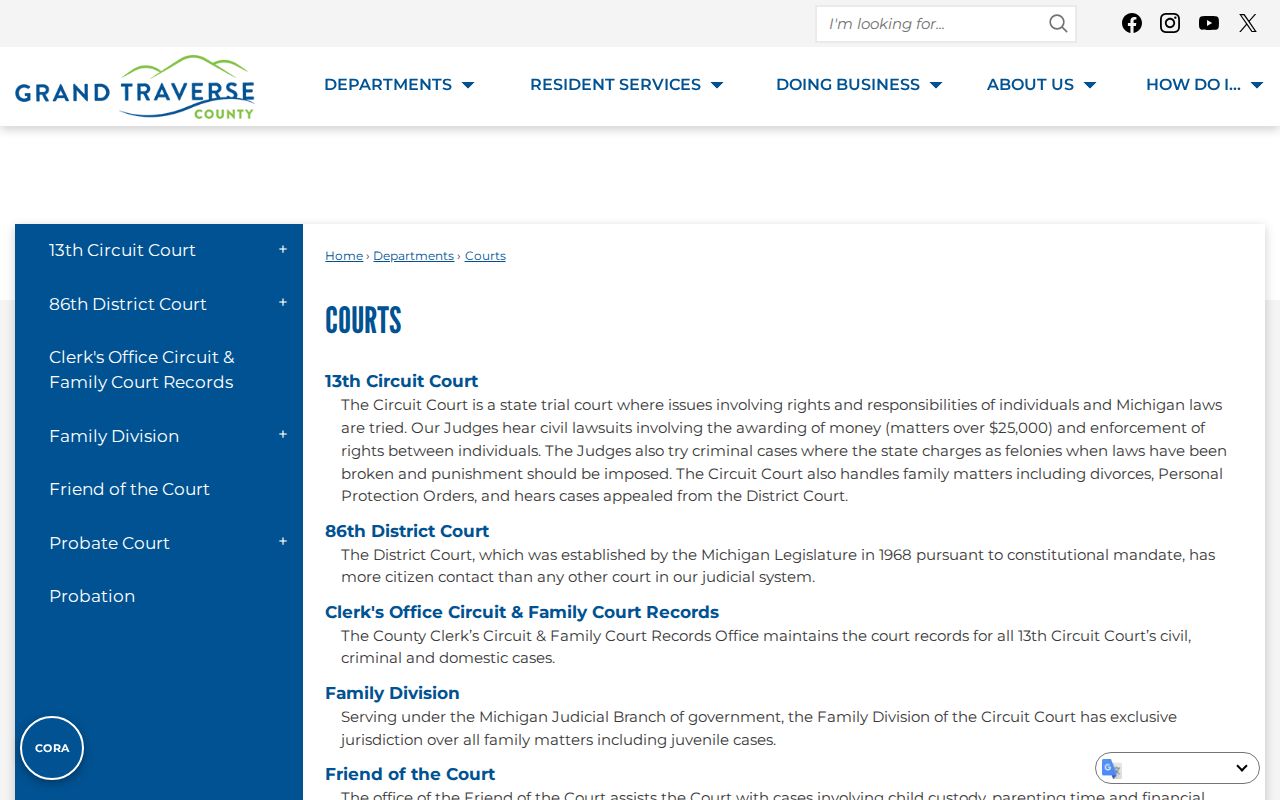
That court split is central to a complete Grand Traverse County criminal record search.
| Channel | Best for | Main limit |
|---|---|---|
| 86th District Court | Misdemeanors and early felony events | A bound-over felony continues under a Circuit file |
| 13th Circuit Records | Felony pleas, trials, and sentences | Does not replace the police report |
| Jail and Central Records | Custody, booking, and incident reports | Booking charges may change |
| ICHAT | Qualifying Michigan public history | No warrants, federal, tribal, or local-only files |
Michigan Official Background Checks
The Michigan State Police Criminal Justice Information Center runs ICHAT, the official public name-search product. A user creates an account, enters a name, sex, race, and date of birth, then pays $10 per search. The result may show reported Michigan felony arrests and convictions and serious-misdemeanor convictions. It suppresses nonpublic material and omits warrants, traffic records, juvenile files, federal matters, tribal matters, local misdemeanors, and records from other states.
The Michigan State Police criminal-history overview explains the boundary between name-based ICHAT and fingerprint-supported records.
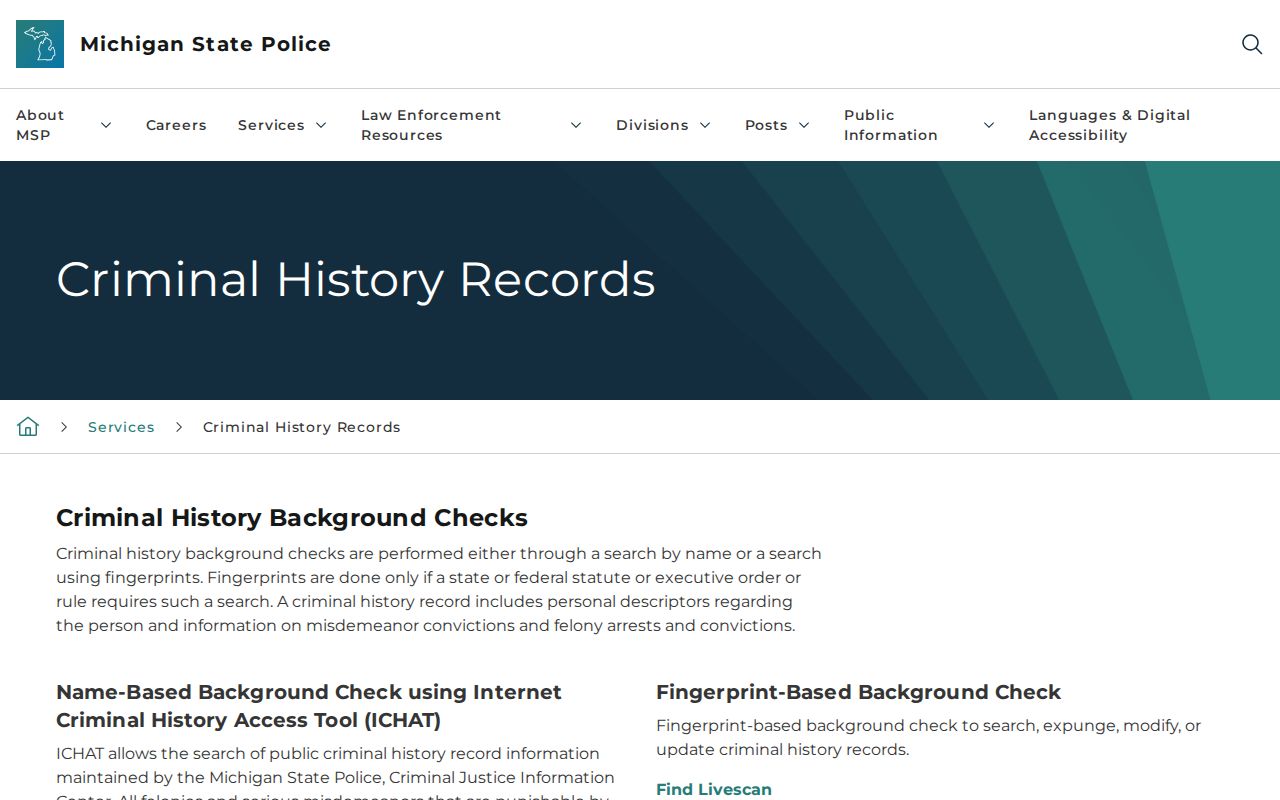
This distinction matters when reviewing your own record because a name match is not the same as a fingerprint-confirmed identity match.
| Product | Identity method | Published fee |
|---|---|---|
| ICHAT public history | Name and demographics | $10 per search |
| MSP personal record review | Fingerprint card | $30, plus $1 for each added certified original |
| FBI Identity History Summary | Fingerprints | $18 direct FBI fee, verify when ordering |
| Authorized Live Scan | RI-030 service code and fingerprints | Varies by service and vendor |
Grand Traverse Fingerprint Record Review
A person seeking a fuller review of their own Michigan record can use MSP’s fingerprint process. The packet goes to MSP CJIC with a fingerprint card, cover letter, and the published fee. MSP estimates three to five weeks for the mailed personal review. An authorized electronic check works differently: the requesting agency supplies an RI-030 code, a Live Scan site captures the prints, and the result goes to that authorized agency rather than becoming a broad public search.
Traverse City Police identifies IdentoGO fingerprint services at 10783 E. Cherry Bend Road, Studio 19.
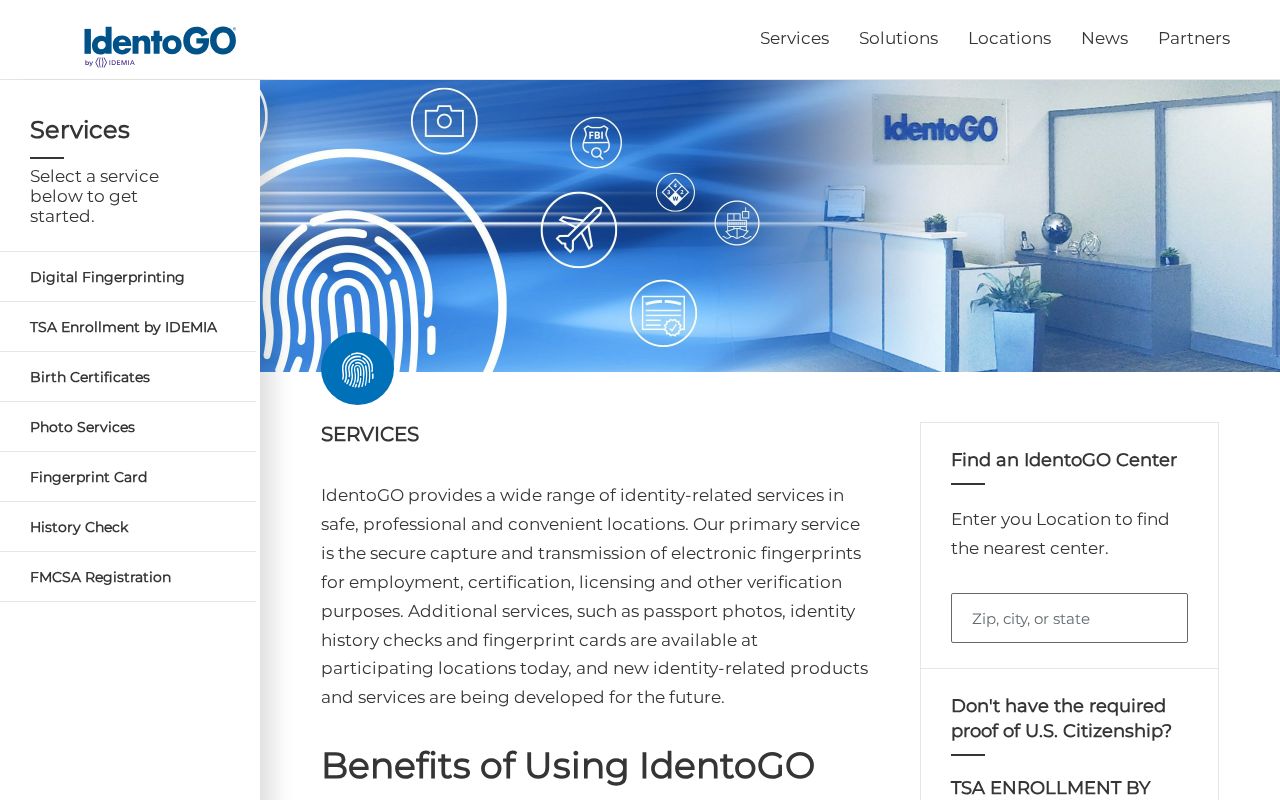
Appointments and service codes should be confirmed with the vendor because the local capture cost depends on the service requested.
Grand Traverse Criminal Record Types
Each Grand Traverse County criminal record has a specific maker and purpose. The arresting agency writes what officers saw and did. The jail records intake and custody. A court file shows what prosecutors charged and what the judge decided. ICHAT compiles qualifying state reports. OTIS describes certain MDOC custody and supervision. PSOR is a separate statutory registry. None should be read as a complete copy of the others.
- Incident and arrest report: an agency narrative that may contain protected or redacted details.
- Booking record: jail intake, charge, bond, hold, and release data that does not prove guilt.
- District and Circuit files: complaints, hearings, pleas, orders, disposition, and sentence.
- Repository record: an MSP summary of qualifying reported events rather than the full local file.
- Custody and registry products: jail, OTIS, VINELink, and PSOR each have distinct coverage.
Grand Traverse Sheriff Record Requests
The Sheriff and Traverse City Police share Central Records at the Sergeant Dennis W. Finch Law Enforcement Center. The office retains police and crash reports for those two agencies and processes requests for releasable material. Give the report number when known, the involved names, date, time, location, and the exact record or medium sought. Walk-in, phone, fax, and written FOIA channels are available. Reports created by MSP, DNR, campus public safety, or another agency must go to that original custodian.
The official Grand Traverse Records Division profile publishes the shared office’s role and contact details.
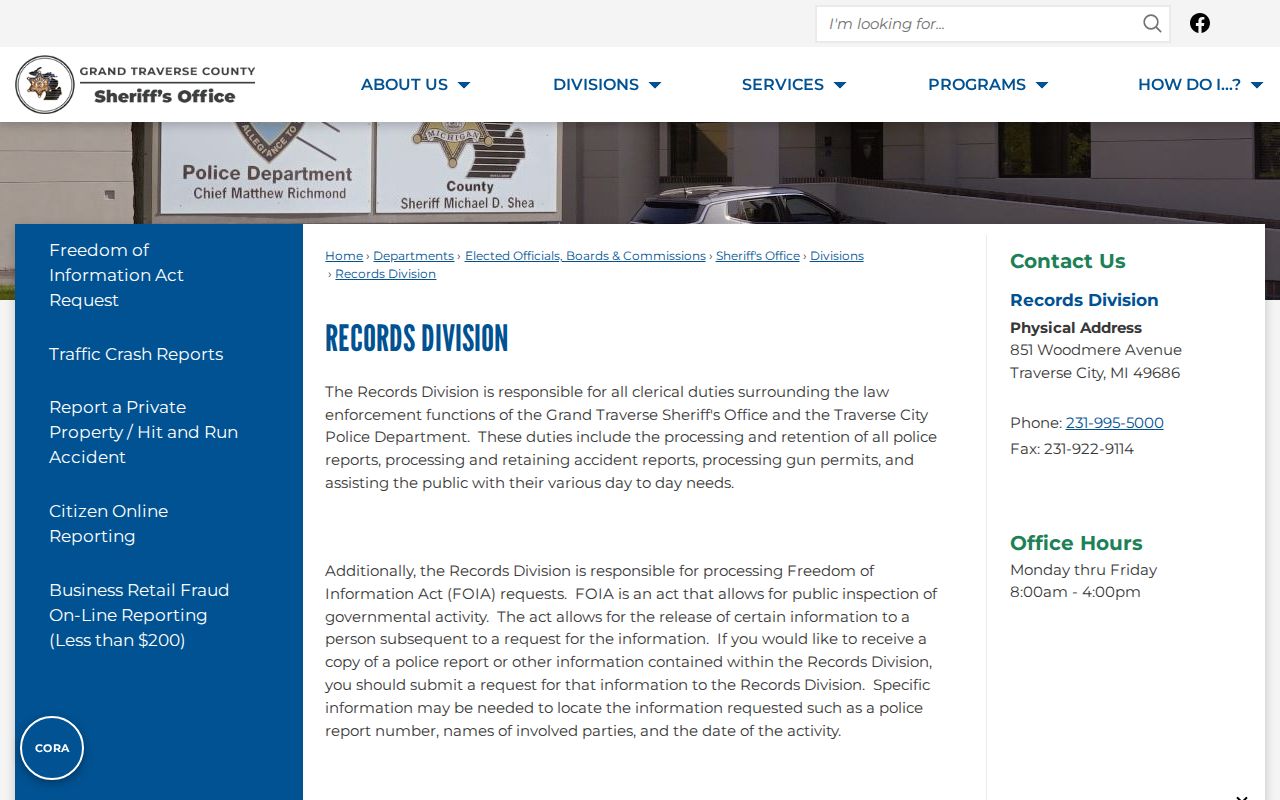
The shared desk reduces confusion for Sheriff and TCPD files, but it is not a countywide pool for every police agency.
Shared Central Records
851 Woodmere Avenue
Traverse City, MI 49686
231-995-5005
County-posted hours: weekdays, 8:00 a.m. to 4:00 p.m.
County Correctional Facility
320 Washington Street
Traverse City, MI 49684
231-922-4530
Call for current custody information.
86th District Court
280 Washington Street, Suite 121
Traverse City, MI 49684
231-922-4580
Misdemeanors and felony preliminary events.
Inside a Grand Traverse County Criminal Record
A good record review starts by naming the product. Repository results often begin with identity descriptors and then group arrest cycles, agencies, charges, court tracking, dispositions, and sentences. Grand Traverse County court records add hearings, motions, counsel, bond orders, costs, and the register of actions. Jail files add intake, custody, property, photograph, fingerprints when required, holds, and release. Protected identifiers, victim data, juvenile information, and nonpublic events may be absent.
| Name & Identifiers | Legal name, aliases, date of birth, physical descriptors, and record identifiers where public. |
|---|---|
| Arrest / Booking Data | Agency, time, place, intake number, booking charge, bond, holds, and release. |
| Charges & Statutes | Count, alleged offense, Michigan citation, and filing level. |
| Disposition | Dismissal, plea, verdict, acquittal, or other final outcome by count. |
| Sentence | Jail, prison, probation, fines, costs, restitution, and terms when public. |
| Custody / Supervision | County custody or qualifying MDOC prison, parole, and felony probation status. |
- Register of actions
- The dated court list of filings, hearings, orders, and outcomes.
- Bindover
- The transfer of a felony from District Court to Circuit Court after the preliminary stage.
- Disposition
- The result of a charge, which may differ from the arrest allegation.
- Set aside
- Michigan relief that removes a qualifying conviction from the public record under statute.
Grand Traverse Jail Versus OTIS
The county inmate inquiry, jail line, VINELink, and OTIS answer different custody questions. The county’s Tyler/New World interface is meant for county custody, but it did not render reliably during official research. The practical fallbacks are the jail’s 24-hour information line, the lobby, VINELink custody notifications, and a Sheriff records request. No official Sheriff or TCPD app with a booking or warrant lookup was verified.
The MDOC explanation of OTIS states that the database does not cover county-jail-only cases.
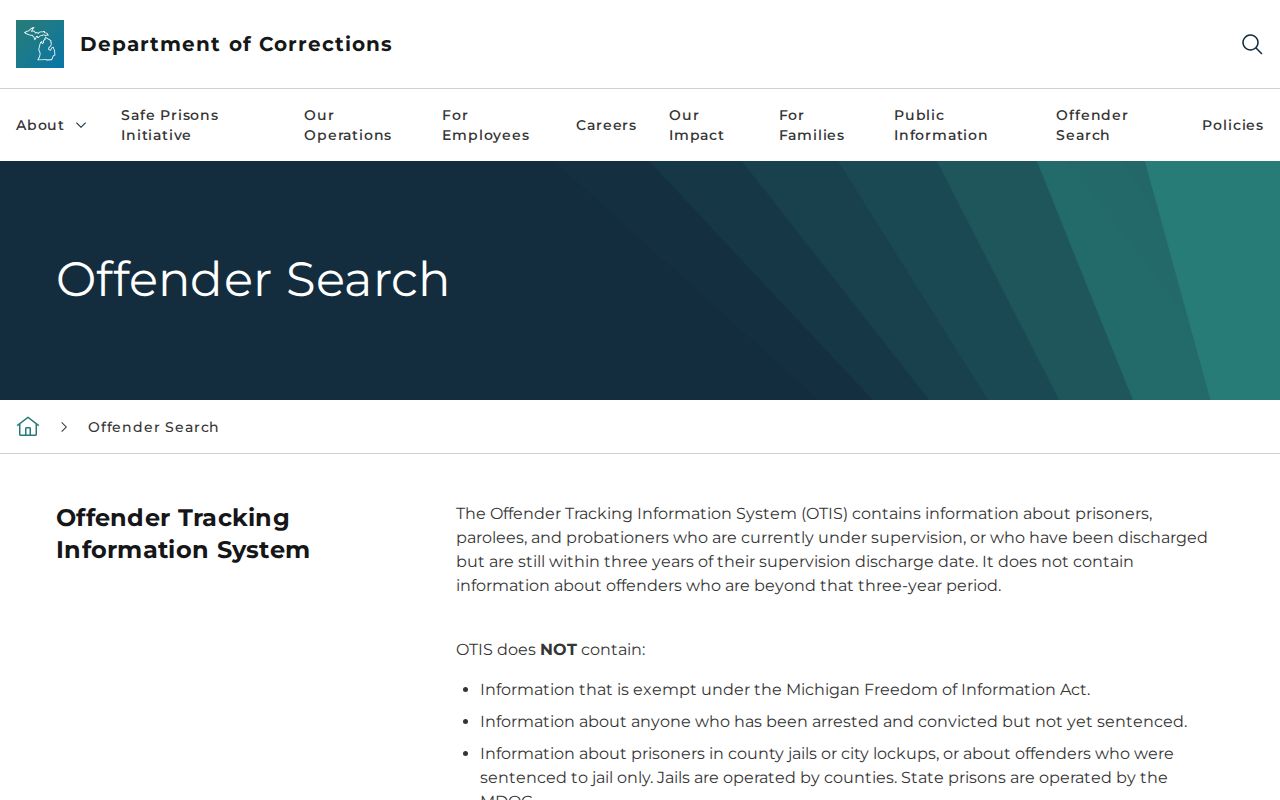
Use OTIS after MDOC prison custody, parole, or felony probation begins, and remember that most people disappear from public OTIS after three years beyond discharge.
Note: A missing OTIS result does not rule out a Grand Traverse County jail stay, misdemeanor probation, or an older discharged case.
Public Access Laws in Michigan
Public access starts with the right custodian. Michigan FOIA governs requests for many executive-branch and local agency records, while court access follows court rules. A police FOIA sent to the court will not produce an officer’s report, and ICHAT will not provide a court pleading. A public record can still contain lawful redactions for victims, minors, personal identifiers, active investigations, or safety needs.
Key Michigan rules:
MCL 15.231 states Michigan’s policy of access to public-body records.
MCL 15.235 sets the usual five-business-day response and one allowed extension.
MCL 28.243 supports criminal-record reporting and dissemination through the state system.
MCL 780.621 defines application-based conviction set-aside eligibility and exclusions.
Grand Traverse Warrant Record Checks
No public Grand Traverse County active-warrant database or statewide public LEIN search was verified. LEIN serves law enforcement, not public self-service. Check the 86th District or 13th Circuit register for a public warrant event, then call the issuing court. The 86th District line is 231-922-4580. Sheriff administration is 231-995-5000, and the jail line is 231-922-4530. A Sheriff FOIA may provide releasable confirmation, but sealed warrants and investigative affidavits can remain unavailable.
Public docket data can lag service or recall. Someone addressing their own warrant should identify the court and case, seek legal advice when needed, ask for surrender and bond instructions, and verify the later recall with the issuing court. The jail adds a $10 warrant-processing fee to the applicable bond. Do not visit simply to test whether a warrant exists unless prepared for arrest.
Different warrants also leave different public traces. A bench warrant may appear in a register of actions after a missed hearing. An arrest warrant rests on a probable-cause finding, while a search warrant authorizes a search of a place or property. Probation-violation and out-of-county fugitive warrants involve other custodians. A docket may confirm that an order was issued, but it may not expose the affidavit, service detail, or present bond terms. Direct verification is the safe last step.
Sealed, Expunged, and Restricted Records
Michigan uses both “set aside” and “expungement.” Application-based relief starts with the sentencing record, a certified judgment or register of actions, the court application, fingerprints, and service on the required offices. MSP CJIC charges $50 to process the set-aside packet and estimates about eight weeks for its part. Serious assaultive offenses, life-maximum offenses, specified sexual and child-abuse offenses, terrorism-related crimes, and some traffic matters face exclusions or limits.
The MSP conviction set-aside instructions describe the packet and fingerprint steps.
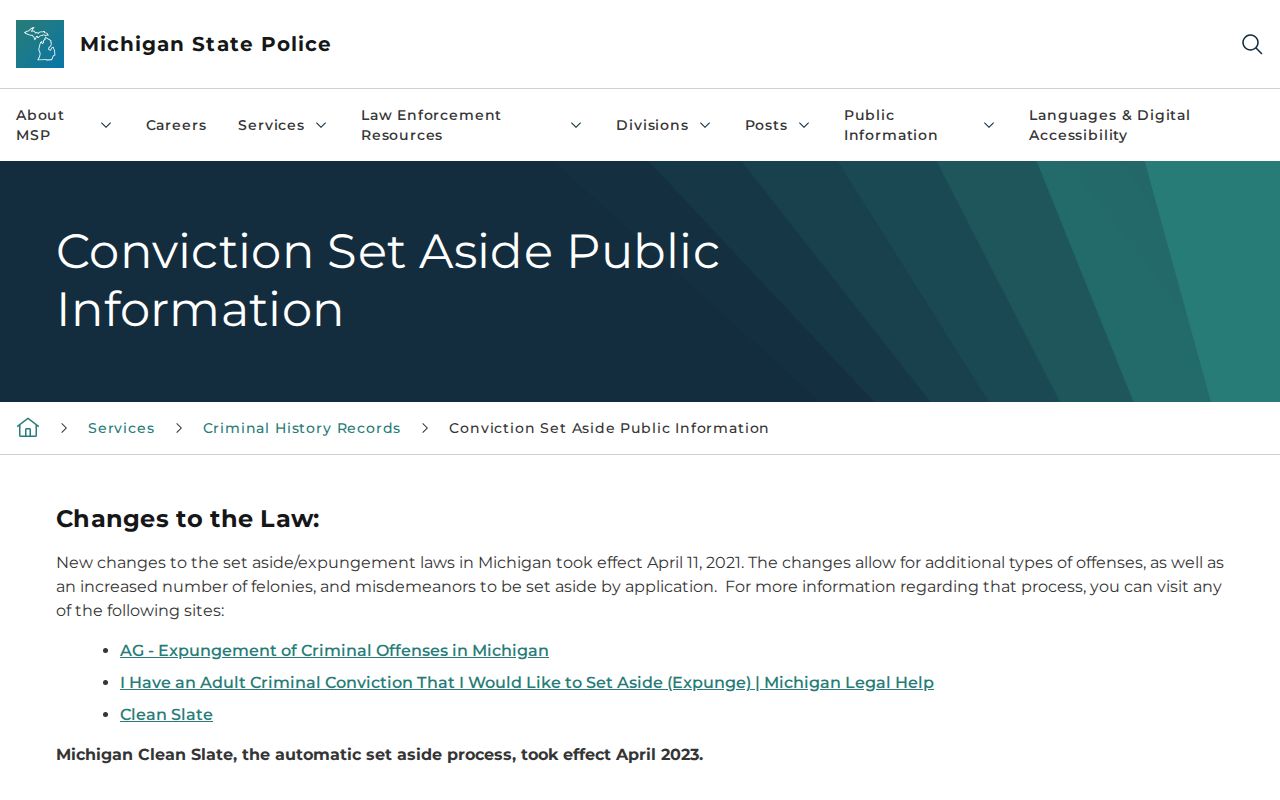
Automatic Clean Slate relief is also limited. Verify a claimed set-aside in ICHAT and both local court indexes, then send a certified order to the source custodian if an eligible public entry remains.
Grand Traverse Criminal Record Flow
An arresting agency begins the event with its report. The Grand Traverse County jail creates the booking and custody entry. Prosecutors decide which charge to authorize. The 86th District opens misdemeanors and felony preliminary files. A bound-over felony moves to the 13th Circuit. Courts then report dispositions to MSP CJIC. The sequence explains why a booking charge, filed charge, and conviction may not match.
Record flow: Arresting agency › County jail › Prosecuting Attorney › 86th District Court › 13th Circuit Court when bound over › MSP CJIC.
The official Grand Traverse County Sheriff page routes readers to law-enforcement and records services.
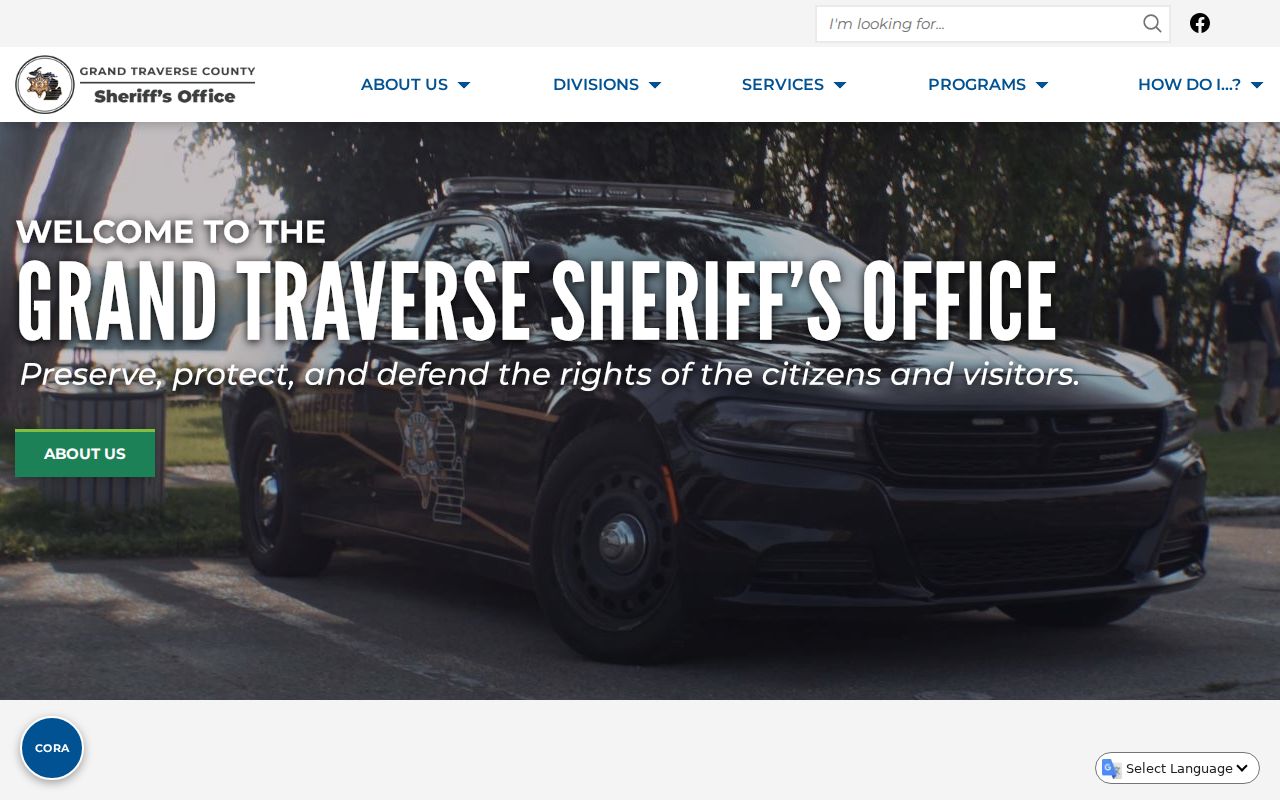
The Sheriff’s file is one part of that chain, not a substitute for the final court disposition.
Grand Traverse Sobriety Court Records
The 86th Sobriety Court began in 2001. It uses frequent judicial contact, intensive probation, continual testing, and treatment for qualifying repeat intoxicated-driving cases. Recovery Court is another locally named treatment-focused track described by the Prosecuting Attorney. These programs do not create a separate public criminal-history repository. Their public docket events remain tied to the underlying court case, while treatment, assessment, and supervision details can be restricted.
A searcher should read a program entry beside the charge, sentence, and later disposition rather than treating participation as a new offense. District Court Probation handles local misdemeanor supervision, while MDOC Field Operations handles felony probation and parole. That split also explains why a misdemeanor probation term will usually not appear in OTIS.
Grand Traverse County also uses a regional Managed Assigned Counsel model rather than advertising a traditional county public-defender office. A person applies for appointed counsel at the first District Court appearance when incarceration is possible, and the judge reviews a financial form. Counsel information may appear in the public case file, but private attorney communications do not. The Prosecuting Attorney files charges for the People of Michigan in both local criminal courts. Those two roles belong to the prosecution record and should not be confused with an officer’s first arrest allegations.
Grand Traverse County Criminal Records by City
Grand Traverse County has three incorporated municipalities. Traverse City maintains a police department and shares Central Records with the Sheriff. Kingsley and Fife Lake have no separately verified village police department, municipal court, or jail, so their criminal record paths run through Sheriff or MSP reports, county booking, and the 86th and 13th courts. The city guides keep those local differences clear.
Traverse City Criminal Records
15,678 residents in 2020 citywide. TCPD reports and county-held bookings use different custodians.
Kingsley Criminal Records
1,431 residents in 2020. Sheriff and MSP records route to county courts and custody.
Fife Lake Criminal Records
456 residents in 2020. Village records and police records have different custodians.